








World Championship of Legends: the story continues
The World Championship of Legends brings familiar international cricketers back into a competitive T20 setting. For supporters, the appeal starts with recognition: a distinctive run-up, an unmistakable cover drive or a captain whose field changes once shaped entire series. The interest lasts because those skills are tested again, against opponents who know them well. WC Legends Cricket follows that contest through practical guides, historical records and analysis that looks beyond a famous name.
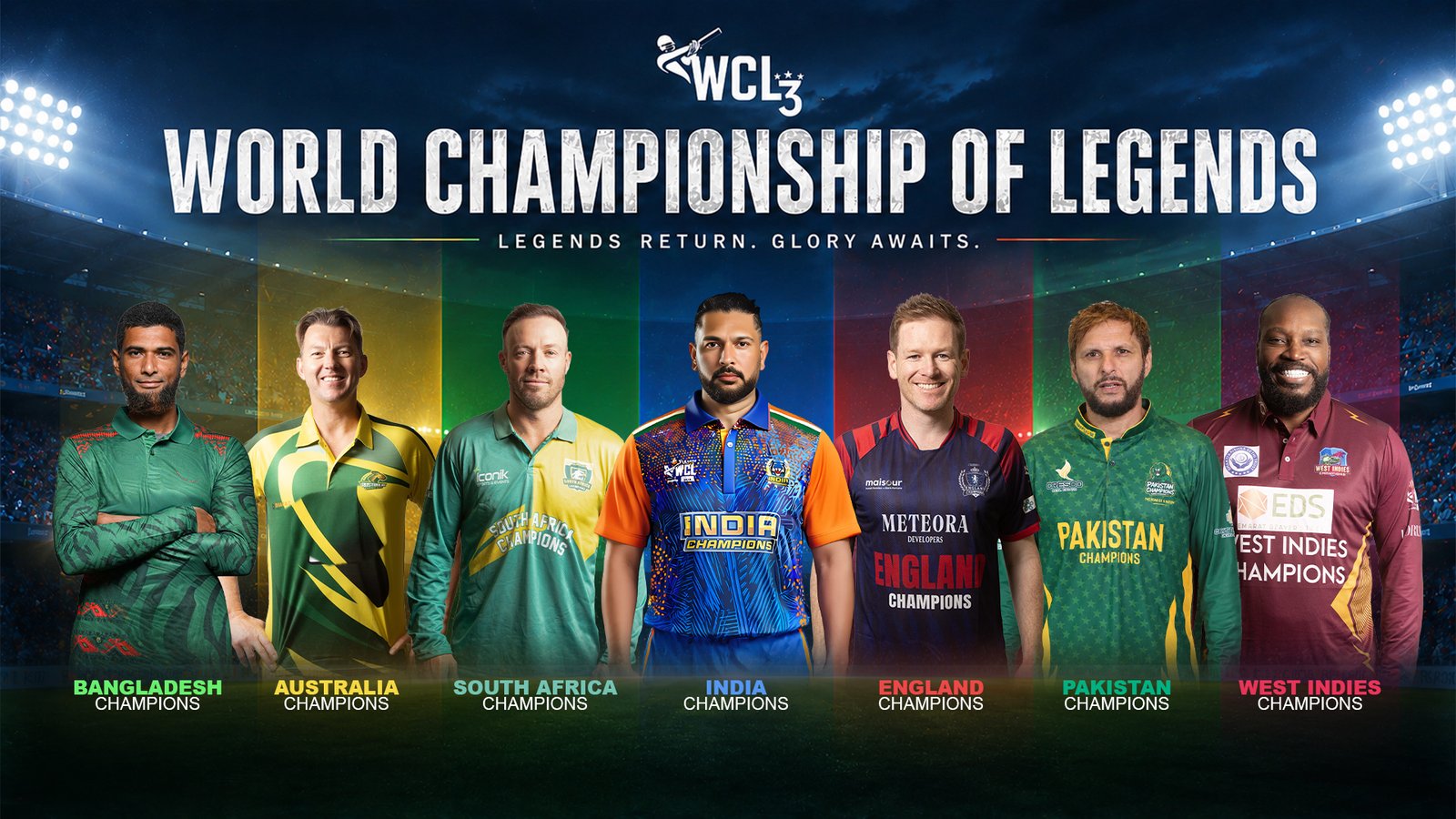
The third edition is scheduled for 3–18 October 2026 in the United Arab Emirates. Bangladesh Champions join the established six teams, taking the field to seven. That expansion matters on the pitch as well as on the fixture list: a round-robin programme gives every team six opponents, and a new side introduces combinations that the first two seasons could not offer. Our fixture guide is the starting point for dates and match times; the team directory explains the players and the background behind each side.
What kind of cricket is WCL?
This is a short-format competition built around former international players and country-branded franchises. India Champions, Pakistan Champions and the other participating sides are WCL teams; their matches are not senior men’s international fixtures. Keeping that distinction clear makes the record book easier to understand. A century here belongs to a player’s WCL tournament record rather than being added to his international T20I total.
Experience gives the cricket its character, but experience alone does not settle a match. Batters must judge how much of their old range remains repeatable under pressure. Bowlers have to find a workable combination of accuracy, pace changes and physical endurance. Fielding can turn an apparently comfortable chase into a contest. These are useful questions for analysis because they can be tested against what actually happens, rather than assumed from a player’s reputation.
Seven nations, seven different starting points
India enter the story as the inaugural winners. South Africa arrive with the most recent title. Pakistan have reached both completed finals, establishing a strong tournament record while still seeking the trophy. Australia, England and West Indies bring their own combinations of power, seam bowling, spin and batting depth. Bangladesh begin without an earlier WCL season to use as a baseline, making their first selection and opening matches especially informative.
A fair team comparison needs more than a list of former international achievements. A full squad, an available squad and the eleven selected for a particular match are not interchangeable. Our team pages distinguish previous-season rosters from current announcements and explain where selection remains unsettled. The same care applies to captaincy: a player who led in 2025 is not automatically the confirmed captain for every match in 2026.
Why the UAE chapter is worth following
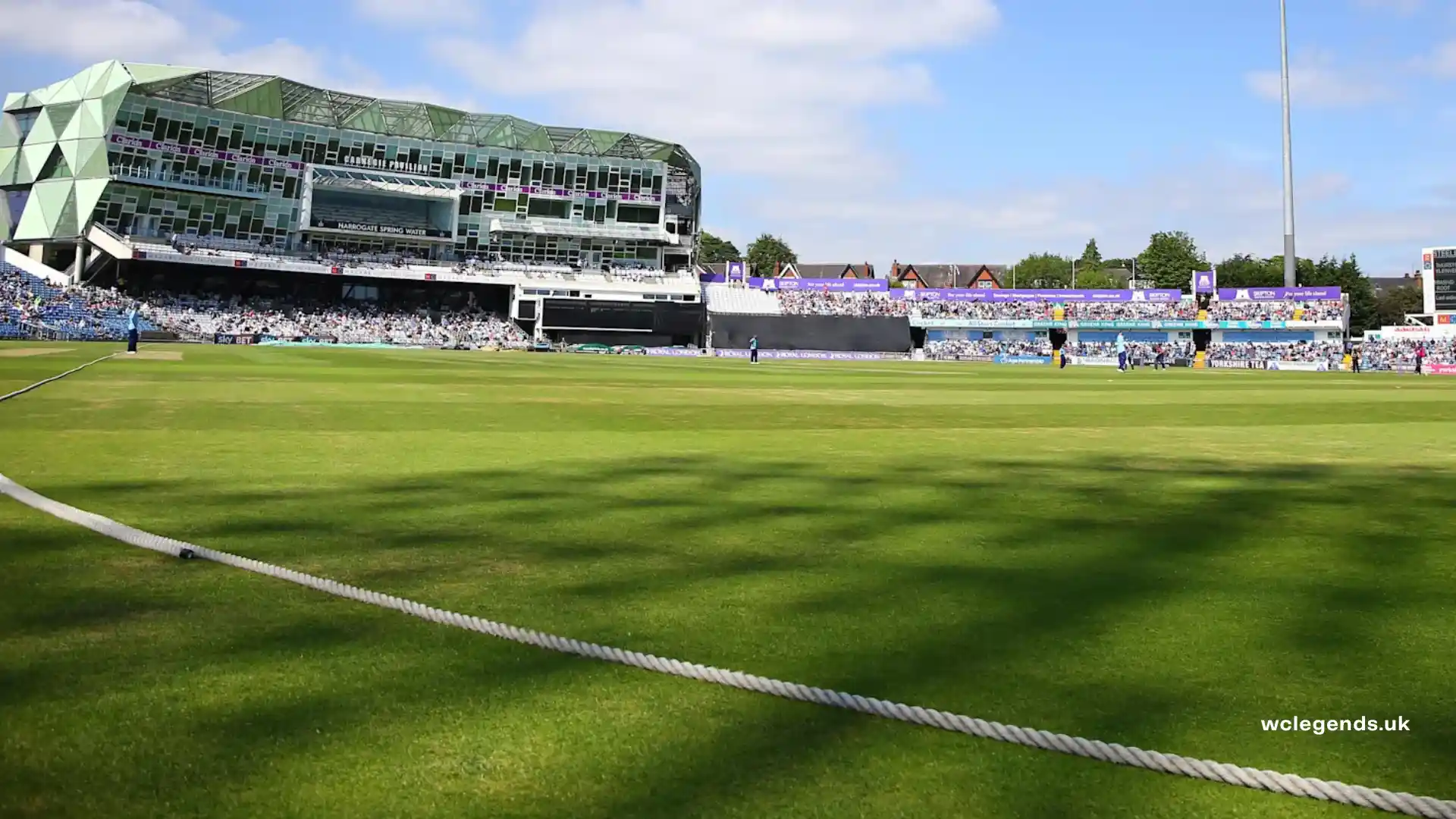
The move from England to the UAE changes the setting in which those familiar skills will be tested. Sharjah Cricket Stadium and Dubai International Cricket Stadium host the listed fixtures. Their names will be familiar to many supporters, but a venue’s reputation is not a substitute for a match-day assessment. The strip in use, boundary placement, surface preparation and conditions at the start of play all influence the contest.
An afternoon start and an evening start can produce different practical challenges for spectators and players. Fans should plan transport around the listed local time and consult the venue’s current entry information before travelling. For cricket analysis, the sensible approach is to wait for the surface and toss information before announcing a par score or a certain chasing advantage. Our ground guide separates those practical details from broader cricketing context.
How the tournament is organised
The published calendar contains 24 fixtures: 21 league games, two semi-finals and a final. The league schedule is designed around seven teams playing one another once. The knockout places must be settled through the competition standings and the applicable regulations. Until qualification is complete, a semi-final slot identifies a stage of the tournament rather than a confirmed pair of teams.
The match cards on this site show the schedule and any score or result entered in the match record. An upcoming card is not a live ball-by-ball feed. Match status, a completed scorecard and a statistical leaderboard serve different purposes, so they are kept distinct. Follow the standings guide for the table’s meaning and the individual match guides for the background to each contest.
The first two champions
India Champions won the inaugural 2024 competition, beating Pakistan Champions by five wickets in the final. South Africa Champions took the 2025 title after defeating Pakistan by nine wickets at Edgbaston. Those results give the tournament two champions across its first two editions and Pakistan a place in both final chapters. They also show why league form and knockout outcomes should be assessed separately.
The defining innings of the 2025 final belonged to AB de Villiers, who finished unbeaten on 120 from 60 balls. South Africa completed a chase of 196 inside 17 overs. His season total of 431 runs made him the central figure in the batting records, but the result still belonged to a team: the supporting innings, the earlier bowling effort and the opportunities created in the field all formed part of the win. Our record pages explain the numerical achievements without reducing every match to a single performer.
Read the records by season
Cricket numbers become misleading when their scope disappears. A 2024 six-hitting table is not a career leaderboard. A 2025 batting total is not a forecast for October 2026. A bowling economy rate needs an overs sample, and the notation 16.5 means sixteen overs and five legal balls rather than sixteen and a half overs. Small distinctions like these matter when comparing players.
Our batting guide, bowling guide and six-hitting guide use season labels and explain what each measure can establish. The aim is to help you answer a cricket question: who supplied sustained runs, who removed batters, and which attacks or batting units changed the scoring rate. A large number is the beginning of that discussion, not its conclusion.
Players: reputation and present role
Legends cricket encourages a long memory, yet selection is about the role needed now. An opener may be asked to attack immediately rather than bat through the innings. A former frontline bowler may offer a shorter spell or a particular matchup. An all-rounder’s value can lie in giving the captain an extra option when the first plan fails. Our player coverage connects a cricketer’s established skills to those present questions.
The player guide is organised around names, teams and roles. Historical signing stories remain available as archive coverage and retain their original season context. That allows a reader to follow how a team was assembled without mistaking a 2025 announcement for fresh confirmation. When a match-day XI is available, it should be read as a separate selection decision.
Watching from different countries
The right place to watch depends on both your location and the tournament edition. A broadcaster that carried the previous season may not hold the same rights this time. A television channel and an app can also offer different coverage within the same territory. Before purchasing a package, check the provider’s own current event listing and whether live matches are included.
Our viewing guide explains those checks and keeps historical broadcaster information in its proper context. We do not present an old broadcaster logo as proof of current rights, and a link to a provider does not mean every reader can watch there. Match times can be converted through the fixture filters, which is particularly useful when following from India, Pakistan, Bangladesh or the United Kingdom.
An independent publication about the tournament
WC Legends Cricket is an independent editorial website. It is not the World Championship of Legends organiser, a franchise operator or an official ticket office. Harshit Tomar and Ajay Devgn are identified by the tournament’s own website as its founder/chief executive and co-founder respectively; they are not presented here as members of our newsroom. The distinction protects the usefulness of the information and makes its origin clear.
Articles carry named writers linked to their work. Sources, season labels and corrections matter more than decorative claims of authority. If a figure or fixture changes, readers should be able to understand what the page now says and how to query it. Our About page introduces the publication, and the contact page provides a route for factual corrections.
Start with the question you came to answer
For a date or start time, use the fixture calendar. For player availability, open the relevant team guide. For an earlier performance, choose the season-labelled record page or historical report. For the bigger story, explore the newsroom. The site is built to let a reader move from a quick answer into deeper context without having to choose between the two.